

England’s Most Expensive Manager Blames 'DNA' For World Cup Exit. Have The FA Made A Mistake?
Thomas Tuchel earns a reported £5 million a year on a contract written for one job: win a major tournament with England.

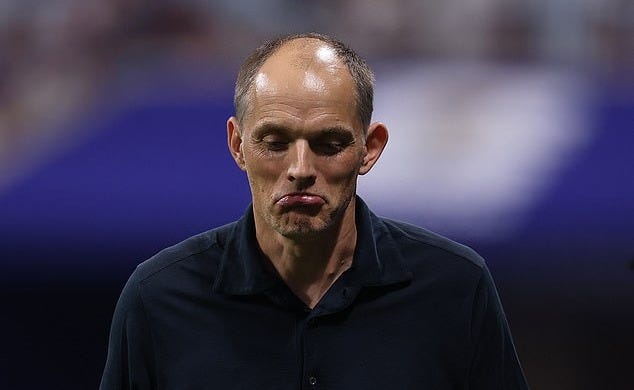
When the FA appointed Thomas Tuchel in November 2024, the logic was stated openly and repeated everywhere. Gareth Southgate had taken England to two European Championship finals and a World Cup semi-final and could not get them over the line. Tuchel was the specialist. A Champions League winner. A knockout football expert. The man you hire not to build something but to finish it.
The contract ran to the end of the 2026 World Cup. That was not an accident of scheduling. It was the mandate expressed in legal form. One tournament. Win it. And it made him the most expensive England manager in history, on a reported salary in excess of £5 million a year.
On Wednesday night in Atlanta, England led Argentina 1-0 through Anthony Gordon and were 35 minutes from a first World Cup final since 1966. Tuchel then removed attackers for centre backs, fielded six defenders at one point, and watched his side record 12% possession between Gordon’s goal and Lautaro Martinez’s stoppage-time winner. England lost 2-1. It was their third World Cup semi-final defeat since they last won the thing.
What happened next is the actual story, and it is a business story, because it is about how one of the wealthiest governing bodies in world sport handles accountability when its most expensive hire fails at the specific job he was hired for.
Tuchel said he had no regrets. He described the semi-final as an achievement in itself. He then went further, blaming a weakness in English football’s DNA for the inability to keep the ball under pressure, which is a striking argument from a man who removed his ball players and instructed the team to defend a one-goal lead for half an hour. The DNA did not pick the substitutions.


Within a day, FA chief executive Mark Bullingham confirmed the governing body retained full belief in Tuchel, and reports followed that he will lead England into Euro 2028. The specialist hired to finish the job has failed to finish it and been handed the next one. The mandate has quietly shifted from win the World Cup to build toward the Euros, and almost nobody is asking the FA to explain the change.
The Economics of Not Deciding
The commercial context makes the FA’s position more understandable and less defensible at the same time.
Sacking a manager who reached a World Cup semi-final would cost the FA a settlement, a search, and a public admission that the specialist experiment failed. Keeping him costs nothing today and defers every difficult question to tournament results that are two years away. Governing bodies, like most large organisations, will choose deferral over decision almost every time the choice is available.
And there is a bigger commercial force at work. Euro 2028 is hosted by the United Kingdom and Ireland, with England’s matches at Wembley and a likely final on home soil. It is the biggest revenue and reputation event in the FA’s next decade. Stability heading into a home tournament is worth genuine money: sponsor confidence, ticket demand, broadcast narrative, the entire commercial build-up functions better without a managerial circus in the middle of it. Backing Tuchel now is not a football judgment. It is a commercial risk-management judgment dressed as one.
The problem is what that judgment ignores. The FA’s own hiring logic in 2024 was that specialists are accountable for specific outcomes. That was the entire justification for moving on from Southgate, a manager who had overachieved against every historical baseline. If semi-finals were unacceptable then, they are unacceptable now, or the 2024 decision made no sense. The FA cannot have both. Either the Southgate standard was wrong, in which case someone should say so, or the Tuchel outcome fails it, in which case full belief is an odd response.
What the Comments Actually Signal
There’s a case for keeping Tuchel and it is worth being fair about it. England were the better side for an hour against the eventual finalists. Harry Kane says the squad remains close and knocking on the door. Continuity into a home Euros has legitimate value, and a two-year runway with this player pool is a genuinely strong position.
But the comments are the tell, and this is where the FA should be paying closer attention than it appears to be. A manager who calls a semi-final an achievement in itself is a manager redefining success downward in real time. A manager who attributes the defeat to national footballing DNA is externalising the one variable he was hired to control. These are not the words of a specialist finishing a job. They are the words of a man negotiating the terms of his next one, in public, three days after the old one ended.
The FA’s silence on that reframing is a choice. Bullingham praised the effort, thanked the fans and moved on. No review has been announced. No assessment of the tactical decisions that turned a winning position into a familiar heartbreak. The most expensive appointment in the governing body’s history has produced the same outcome as its predecessor at greater cost, and the institutional response is to extend the timeline and hope.
England play France in a third-place playoff neither team wants, a fixture Tuchel has already publicly criticised. Then the squad flies home, the tournament ends, and the FA’s bet rolls over to 2028 with the same manager, a rewritten mandate and a home tournament that raises the stakes rather than lowering them.
Maybe it works. Maybe the two-year runway and the Wembley crowd deliver what Atlanta did not, and this piece ages badly. But an organisation that hires for a specific outcome, does not get it, and responds by changing the outcome rather than examining the decision is an organisation that has stopped holding itself to its own logic. The FA has made that trade quietly this week. It deserved to be made out loud.